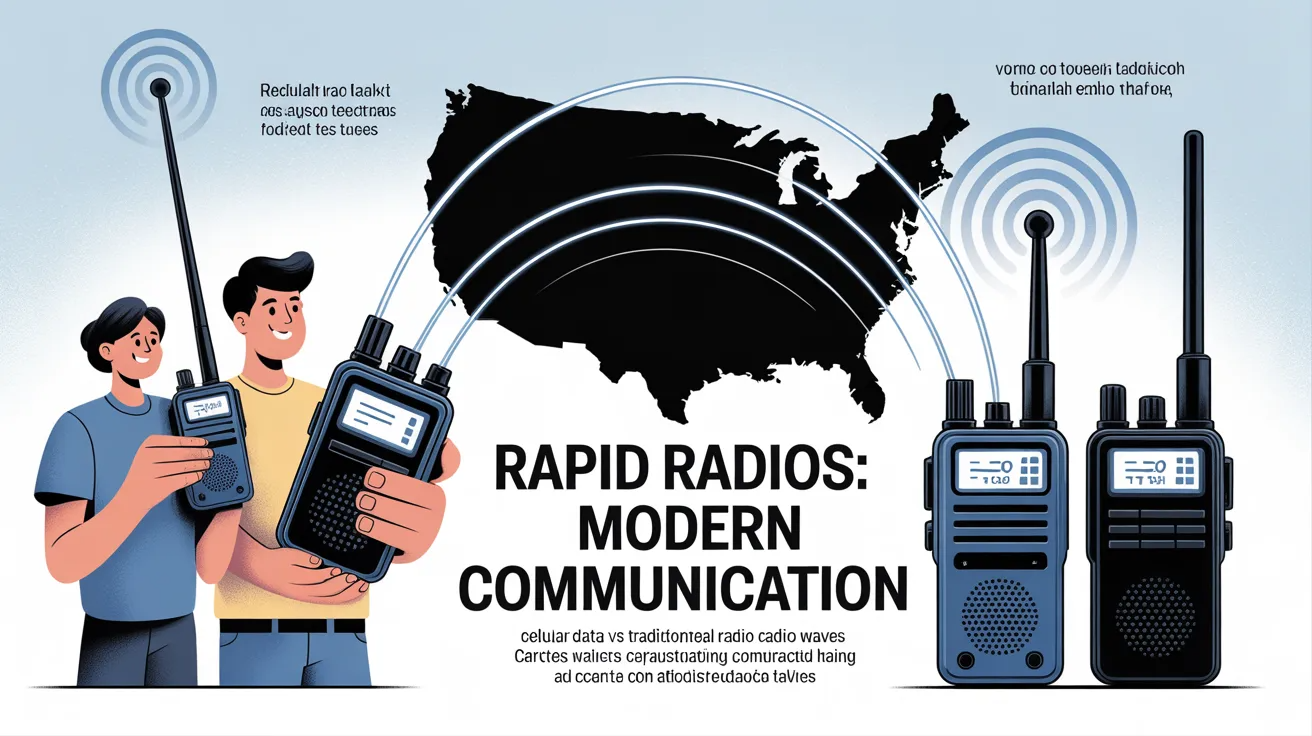
Finding a simple way to talk to your team or family across the country can be tough. You might have heard of rapid radios as a solution for instant, long-range communication. Many people ask, “are rapid radios legit?” The short answer is yes, they are real tools, but they work differently than the old walkie-talkies you might remember from childhood. Instead of using just radio waves, they use modern cellular data to connect you. This guide will walk you through how they function and help you decide if they fit your needs.
What Are Rapid Radios?
Rapid radios are modern communication devices known as “Push-to-Talk over Cellular” (PoC) radios. Think of them as a mix between a rugged, simple walkie-talkie and a smartphone. They give you the instant feel of a classic radio button press but use nationwide cellular networks to carry your voice. Because of this, they do not have the range limits of standard, low-power radios. They are built for people who need to coordinate with groups, families, or coworkers across large distances without needing to dial a phone number or wait for a connection.
How Do Rapid Radios Work?
You might be wondering, “how do rapid radios work” if they are not like normal walkie-talkies? Traditional radios send signals directly between devices, which only works for a few miles. Rapid radios connect to the internet through cellular towers instead. When you press the button to talk, your voice is turned into digital data and sent over the network to the other devices in your group. This allows you to speak to someone in another city or even another state as easily as if they were standing right next to you.
Are Rapid Radios Legit for Daily Use?
Many users often ask, “are rapid radios legit” because they sound almost too good to be true. They are completely legitimate tools used by businesses, families, and outdoor enthusiasts. They are not a scam, but they do require a cellular signal to operate. If you are in a place with absolutely no cell service, they will not work. However, in any area where your smartphone gets a data signal, these devices usually provide clear, instant communication. They are a professional-grade tool designed for reliability, not a toy.
The Benefits of Using Rapid Radios
One of the biggest advantages of rapid radios is the simplicity they offer for group communication. You do not have to worry about complicated menus, phone books, or app notifications. You simply press one button to speak to your whole team at once. This speed is helpful for construction sites, event staff, or large families traveling in separate cars. Because they use multiple cellular carriers, they often find a better signal than a standard phone might get. This helps keep you connected even when one specific network provider might be struggling.
Understanding the Costs
When researching a rapid radios review, you will likely see mixed comments about pricing. The devices are sold with an upfront cost, and there is a yearly service fee to keep them connected to the cellular networks. While some marketing might say “no monthly fees,” it is important to know that you do pay a yearly renewal. Compared to professional radio systems that require expensive licenses and complex setup, many users find this structure to be quite affordable and transparent. It is best to check the current pricing on their website before buying.
Durability and Build Quality
If you look at any rapid radios reviews, you will notice users praising their toughness. These radios are designed to be dropped, used in the rain, and handled by workers in dirty environments. They feel much more solid than a typical cell phone. Most models are built to last through long shifts on a job site. If you plan to use them for hiking or rough outdoor work, they are a great investment. The simple design also means there is less to break or go wrong over time.
Who Should Use These Devices?
Rapid radios are perfect for people who need instant, group-wide voice contact. They are excellent for business managers who need to check on employees in different locations. They are also popular with RV travelers who want to coordinate between vehicles without using expensive phone minutes. Even families use them to keep in touch during theme park trips or large outdoor events. If you need a device that is easier to use than a phone and more powerful than a short-range radio, this is a strong choice.
A Quick Look at the Technology
The tech inside rapid radios is quite advanced. They use something called AES encryption to keep your private conversations secure. This is a big step up from old-fashioned radios where anyone with a scanner could listen in on your channel. Because they rely on cellular data, they are very efficient with battery use during standby. You can generally count on them to stay ready all day. They also offer clear audio quality, which is vital when you are working in a noisy or busy area.
Comparing to Standard Walkie-Talkies
Standard walkie-talkies are great for very short distances like inside a house or at a campsite. However, as soon as you put a hill or a building between you, they often fail. Rapid radios solve this problem by skipping the direct-signal limitation. They are the clear winner if you need coverage that spans across a town or a state. If you only need to talk to someone in the same room, a standard, cheaper radio might work. For everything else, the PoC technology in these devices is better.
Battery Life and Performance
Most users find the battery life of rapid radios to be very dependable. You can usually get through a full day of heavy use on a single charge. Because they use USB-C for charging, they are very easy to power up in your car or with a portable battery pack. Keep in mind that heavy, constant talking will drain the battery faster than normal use. It is a good practice to put them on the charger at the end of every day to ensure they are ready for the next shift.
Summary: Is This Right for You?
Before you make your purchase, think about where you will use them most. If you live or work in areas with good cellular coverage, rapid radios will likely change how you communicate for the better. They offer a simple, powerful, and secure way to talk. Read through a few more rapid radios reviews to see if your specific region has good network support. If it does, these devices are a fantastic, user-friendly tool that helps you stay connected to the people who matter most.
Comparison Table: Traditional Radios vs. Rapid Radios
| Feature | Traditional Walkie-Talkie | Rapid Radios (PoC) |
| Range | Limited (1-5 miles) | Nationwide (Cell Coverage) |
| Setup | Simple (Frequency match) | Simple (Cloud-managed) |
| Security | Low (Public frequencies) | High (Encrypted) |
| Fees | None (Usually) | Yearly renewal fee |
| Ideal For | Short-range, off-grid | Long-range, business, travel |
Frequently Asked Questions (FAQs)
1. Do rapid radios work without cell service?
No, they require cellular data to work. If you are in a deep wilderness area with zero bars, they will not be able to transmit your voice.
2. Is there really no monthly fee?
There is no “monthly” contract fee, but there is a yearly renewal cost per radio to cover the cellular data service.
3. Can I use these instead of a cell phone?
They are great for voice communication, but they cannot replace a phone for web browsing, texting, or private calling. They are specialized tools for group voice chat.
4. Are these radios hard to set up?
They are very easy to use. Most come pre-programmed, so you simply turn them on, press the button, and start talking to your group.
5. Are my conversations private?
Yes. These radios use encryption so that only the members in your specific group can hear your transmissions.
6. Can I talk to just one person?
Yes, most models allow you to switch between group channels and private, one-on-one calls with the press of a few buttons.
What do you think about these modern communication tools? Are you ready to trade in your old radio for something with nationwide range? Let us know your thoughts or share your own experience in the comments below!
Leave a Reply