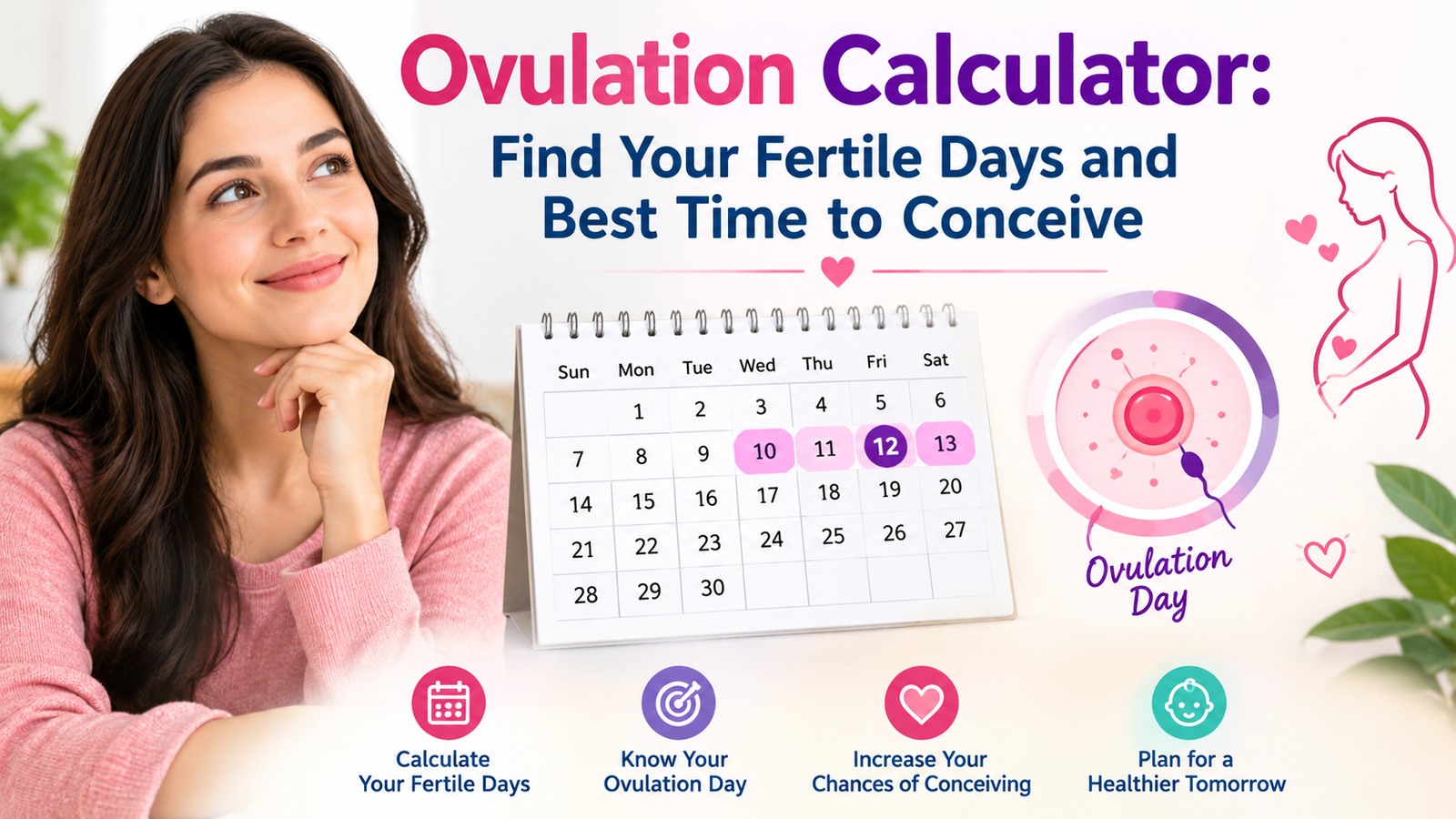
Planning for a baby can bring many questions. You may wonder when ovulation happens, which days are best for conception, and how your menstrual cycle works. An ovulation calculator can help you understand these important dates. It estimates when your body may release an egg and identifies your most fertile days. This information can make pregnancy planning easier and more organized.
Every woman’s cycle is different. Some women have regular periods, while others experience changes from month to month. Your fertile days can also shift because of stress, illness, travel, or hormonal changes. Therefore, a calculator provides an estimate rather than an exact answer. You can use it with other fertility signs for better awareness. In this guide, you will learn how ovulation works, how to estimate your fertile window, and how to recognize common signs of fertility. You will also discover useful tips for tracking your cycle and planning a pregnancy with confidence.
What Is an Ovulation Calculator?
An ovulation calculator is a simple tool that estimates when ovulation may occur during your menstrual cycle. It usually uses the first day of your last period and your average cycle length. Based on these details, it predicts your possible ovulation date and fertile window. This information can help you understand when pregnancy is more likely.
For example, imagine your menstrual cycle lasts 28 days. Your period begins on the first day of the month. A calculator may estimate ovulation around the middle of that cycle. However, the actual date can vary, even when your periods seem regular. The tool cannot confirm that an egg has been released. Instead, it gives you a starting point for tracking fertility. You can combine its results with ovulation tests, cervical mucus changes, and other body signs. These methods provide a clearer picture of your cycle and help you make informed decisions.
How Does an Ovulation Calculator Work?
An ovulation calculator uses basic information about your menstrual cycle. Most tools ask for the first day of your last period and your average cycle length. Some also ask how many days your period usually lasts. The calculator then estimates your next period and possible ovulation date. It uses these dates to identify your likely fertile window.
Ovulation often occurs about 14 days before your next period begins. However, this timing differs among women and cycles. A 30-day cycle may suggest ovulation around day 16. A 26-day cycle may suggest ovulation around day 12. These examples are estimates, not guarantees. Your body may release an egg earlier or later than expected. An ovulation calculator works best when your cycles follow a fairly consistent pattern. If your periods are irregular, calendar predictions may be less accurate. In that case, tracking physical fertility signs can provide additional information.
How to Calculate Your Ovulation Date
You can estimate ovulation by counting the days in your menstrual cycle. Day one is the first day of your period. The cycle continues until the day before your next period starts. Many people have cycles lasting between 21 and 35 days, although individual patterns vary.
A simple method involves subtracting about 14 days from your expected next period. For example, if your next period is expected on day 30, ovulation may happen around day 16. This method assumes a reasonably predictable cycle. It becomes less reliable when your periods change often. You should also remember that ovulation does not always happen on the same cycle day. An ovulation calculator can help you make this estimate without manual counting. Keep a record of your period dates for several months. This record can help you understand your usual pattern and spot changes that may need medical attention.
What Is the Fertile Window?
The fertile window is the time when sexual intercourse can lead to pregnancy. It generally includes the five days before ovulation and the day of ovulation. Sperm can survive inside the reproductive tract for several days under suitable conditions. An egg usually remains available for fertilization for about 12 to 24 hours after release.
This timing explains why the days before ovulation matter so much. Having intercourse before the egg is released allows sperm to be present when fertilization becomes possible. For example, if ovulation occurs around day 14, your fertile window may begin around day nine. The exact dates depend on your cycle and actual ovulation timing. A fertility calendar can help you organize these days. However, the predicted window may miss your true fertile days if ovulation happens earlier or later. Tracking additional fertility signs can improve your understanding of this important period.
How to Use an Ovulation Calculator for Pregnancy Planning
If you are trying to conceive, start by recording the first day of each period. Enter your latest period date and average cycle length into an ovulation calculator. Review the estimated ovulation date and fertile window. These dates can help you plan intercourse during the days when pregnancy is more likely.
Many couples find it helpful to have sex every one to two days during the fertile window. You do not need to identify one perfect day to improve your chances. Regular intercourse throughout this period can provide more opportunities for conception. Try not to feel pressured by the calendar. Ovulation can change, and pregnancy does not always happen immediately. You can also use ovulation predictor kits to look for a rise in luteinizing hormone. These tests may help identify approaching ovulation. If you have concerns about fertility or irregular periods, a healthcare professional can offer advice suited to your situation.
Common Signs of Ovulation
Your body may show several signs around ovulation. Learning these changes can help you recognize your fertile days. However, not every woman notices clear symptoms. Some women experience several signs, while others notice almost none. You should consider these changes alongside your cycle records rather than relying on one sign alone.
Common signs include:
- Clear cervical mucus: Discharge may become slippery, stretchy, and similar to raw egg white.
- Mild pelvic pain: Some women feel a brief ache on one side of the lower abdomen.
- Increased sexual desire: Hormonal changes may affect sexual interest.
- Breast tenderness: Some women notice temporary sensitivity around ovulation.
- A slight temperature rise: Basal body temperature usually increases after ovulation.
- Mild bloating: Some women experience temporary abdominal discomfort.
These signs can provide helpful clues, but they cannot always confirm ovulation. If you experience severe pain, heavy bleeding, or unusual symptoms, seek medical advice.
Can You Use an Ovulation Calculator With Irregular Periods?
Irregular periods can make fertility predictions more difficult. Your cycle length may change from month to month, which can shift your ovulation date. This means a calendar-based prediction may not match your body’s actual timing. If your periods are unpredictable, avoid treating one estimated date as your only fertile day.
You can improve your tracking by recording every period and watching for changes in cervical mucus. Ovulation predictor kits may also help identify hormonal changes before ovulation. However, these kits do not work equally well for everyone. Certain hormonal conditions can affect their results. If your periods are frequently irregular, very far apart, or absent, consider speaking with a healthcare professional. Conditions such as polycystic ovary syndrome can affect ovulation, although irregular periods have many possible causes. A medical assessment can help identify the reason and explain your options. An ovulation calculator can still support your tracking, but it should not replace professional advice when cycles are unpredictable.
Ovulation Calculator vs. Ovulation Predictor Kits
An ovulation calculator and an ovulation predictor kit serve different purposes. A calculator estimates fertile dates using menstrual cycle information. An ovulation predictor kit checks your urine for a rise in luteinizing hormone, often called LH. This hormone usually rises shortly before ovulation. Therefore, a positive test can suggest that ovulation may happen within approximately 24 to 36 hours.
Both methods have advantages. A calculator is easy to use and does not require testing supplies. An ovulation kit can provide more current information about hormonal changes. However, a positive test does not guarantee that an egg will be released. Some conditions can also make test results harder to interpret. For many people, using both methods offers useful information. Start with your cycle dates, then consider testing as your predicted fertile window approaches. If the results remain confusing, ask a healthcare professional about other ways to assess ovulation.
How Accurate Is an Ovulation Calculator?
An ovulation calculator can provide a useful estimate, but it cannot predict ovulation with complete accuracy. Its reliability depends on your cycle pattern and the information you enter. People with consistent cycles may find the estimates helpful for general planning. Those with irregular cycles may see greater differences between predicted and actual dates.
Several factors can affect ovulation timing. Stress, illness, travel, sleep changes, and hormonal conditions may influence your cycle. Even regular periods do not guarantee ovulation on one specific day. For this reason, use calculator results as a guide rather than a confirmed medical finding. You can improve your awareness by combining calendar tracking with cervical mucus observations or ovulation tests. If you are avoiding pregnancy, do not rely on calendar predictions alone. These estimates can miss fertile days and are not a dependable substitute for contraception. A healthcare professional can explain more reliable options based on your needs.
Understanding Your Menstrual Cycle
Your menstrual cycle is the series of changes your body experiences each month. It prepares the reproductive system for a possible pregnancy. The first day of menstrual bleeding marks the beginning of a new cycle. Hormones then help an egg develop and prepare the lining of the uterus.
The cycle has several stages. During the follicular phase, an egg develops inside an ovarian follicle. Ovulation occurs when the ovary releases an egg. During the luteal phase, hormone levels help maintain the uterine lining. If pregnancy does not occur, hormone levels fall and another period usually begins. Cycle lengths differ among women, and the phases do not always last the same number of days. Understanding these stages makes fertility tracking easier. It also explains why the fertile window changes with ovulation timing. An ovulation calculator uses your cycle pattern to estimate these events, but your body may follow a slightly different schedule each month.
What Factors Can Affect Ovulation?
Ovulation is controlled by hormones, so several factors can influence its timing. Stress, sudden weight changes, intense exercise, and illness may affect your menstrual cycle. Sleep disruption and major life changes can also play a role. Some medicines and hormonal conditions may change ovulation patterns as well.
Age can affect reproductive health and fertility. Conditions such as polycystic ovary syndrome and thyroid disorders may also cause irregular cycles. However, one late period does not automatically mean you have a medical problem. Temporary changes happen for many reasons. Keep track of your periods and note any major changes. If your periods stop unexpectedly, become consistently irregular, or cause significant pain, seek medical advice. A healthcare professional can review your symptoms and recommend suitable tests when needed. Remember that an ovulation calculator cannot identify the cause of irregular periods. It only estimates possible fertile dates using the information you provide.
Tips for Improving Fertility Awareness
Good fertility tracking starts with simple, consistent habits. Record the first day of every period in a notebook or phone calendar. Note the length of each cycle and any unusual changes. You can also record cervical mucus patterns and results from ovulation predictor kits. Over time, these records may help you recognize your personal fertility pattern.
If you are trying to conceive, aim for regular intercourse during your fertile window. Eat balanced meals, get enough sleep, and avoid smoking. Limiting alcohol is also important when planning pregnancy. Ask your healthcare professional about taking folic acid before conception. Many guidelines recommend 400 micrograms daily for people planning pregnancy, although some need a different dose. Avoid putting too much pressure on yourself to predict every change. Fertility tracking should help you understand your body, not create unnecessary stress. If conception takes longer than expected, professional support can help you understand the next steps.
When Should You See a Healthcare Professional?
An ovulation calculator is useful for general fertility awareness, but it cannot diagnose fertility problems. Consider seeking medical advice if your periods are repeatedly irregular, unusually heavy, very painful, or absent. You should also discuss persistent concerns about ovulation with a healthcare professional.
For people trying to conceive, fertility evaluations are commonly recommended after 12 months of regular, unprotected intercourse when the woman is under 35. For women aged 35 or older, seeking an evaluation after six months is generally advised. People over 40 may benefit from earlier discussions. You should also seek earlier advice if you have known reproductive conditions or a history of problems that may affect fertility. These timeframes are general guidance, not strict rules for everyone. A clinician can review your health history and recommend appropriate next steps. Early advice may help you understand your options and create a suitable plan.
Biography Table: Quick Facts About an Ovulation Calculator
The following table summarizes the main features of an ovulation calculator and explains how to use its results. It is a reference guide, not a personal medical assessment. The dates shown by a calculator are estimates based on your cycle information. Actual ovulation can occur earlier or later than predicted.
| Feature | Details |
| Tool name | Ovulation Calculator |
| Main purpose | Estimate ovulation and fertile days |
| Information required | First day of the last period and average cycle length |
| Typical cycle range | Often 21–35 days for adults |
| Estimated ovulation | Commonly around 14 days before the next period |
| Fertile window | Usually five days before ovulation and the day of ovulation |
| Best use | Fertility awareness and pregnancy planning |
| Common tracking methods | Calendar, cervical mucus, LH tests, basal body temperature |
| Accuracy | Depends on cycle regularity and individual factors |
| Main limitation | Cannot confirm that ovulation occurred |
| Medical use | Does not diagnose infertility or hormonal conditions |
| Suitable audience | People who want to understand their menstrual cycle |
| Pregnancy prevention | Not reliable as a stand-alone contraceptive method |
| Professional support | Recommended for persistent irregular periods or fertility concerns |
Frequently Asked Questions About an Ovulation Calculator
1. How do I calculate my ovulation date?
Start with the first day of your last period and your average cycle length. Estimate your next period, then count backward about 14 days. This gives you a possible ovulation date. The result is only an estimate because ovulation timing can change between cycles.
2. How many days after my period can I get pregnant?
Pregnancy is possible whenever intercourse occurs during the fertile window. The timing depends on when you ovulate, not simply when your period ends. Sperm can survive for several days under suitable conditions. Therefore, pregnancy may be possible soon after a period, especially with shorter cycles or early ovulation.
3. Can an ovulation calculator tell me the exact day I will ovulate?
No. An ovulation calculator estimates your likely ovulation date using your cycle history. It cannot measure hormone changes or confirm egg release. Ovulation tests and other fertility signs can provide additional clues. Even these methods have limitations and may not confirm ovulation in every situation.
4. Can I get pregnant outside my fertile window?
Pregnancy is most likely when intercourse occurs during the fertile window. However, it can be difficult to identify that window perfectly. Ovulation may happen earlier or later than expected, making calendar predictions less reliable. If you want to avoid pregnancy, use a reliable contraceptive method rather than relying on estimated fertile dates.
5. What if my menstrual cycle is irregular?
Irregular cycles make calendar predictions less reliable. Record your period dates and consider monitoring cervical mucus or using ovulation predictor kits. Speak with a healthcare professional if irregularity continues or your periods stop. They can help identify possible causes and discuss appropriate testing or treatment.
6. When is the best time to have sex to conceive?
The best time is during the fertile window, particularly the days leading up to ovulation. Having sex every one to two days during this period can improve your chances of conception. Since ovulation dates can shift, regular intercourse throughout the fertile window may be more helpful than focusing on one predicted day.
Conclusion
An ovulation calculator can make fertility tracking easier by estimating your ovulation date and fertile window. It helps you understand your menstrual cycle and plan when to try for pregnancy. However, every woman’s body follows its own pattern, so calculator results should not be treated as exact predictions.
For better fertility awareness, record your period dates and watch for changes in cervical mucus. You may also consider ovulation predictor kits for additional information. If your cycles are irregular or pregnancy takes longer than expected, a healthcare professional can help you understand your options. Start by tracking your next period and learning about your body’s natural signs. Small, consistent steps can help you feel more informed and prepared throughout your pregnancy planning journey.
Leave a Reply