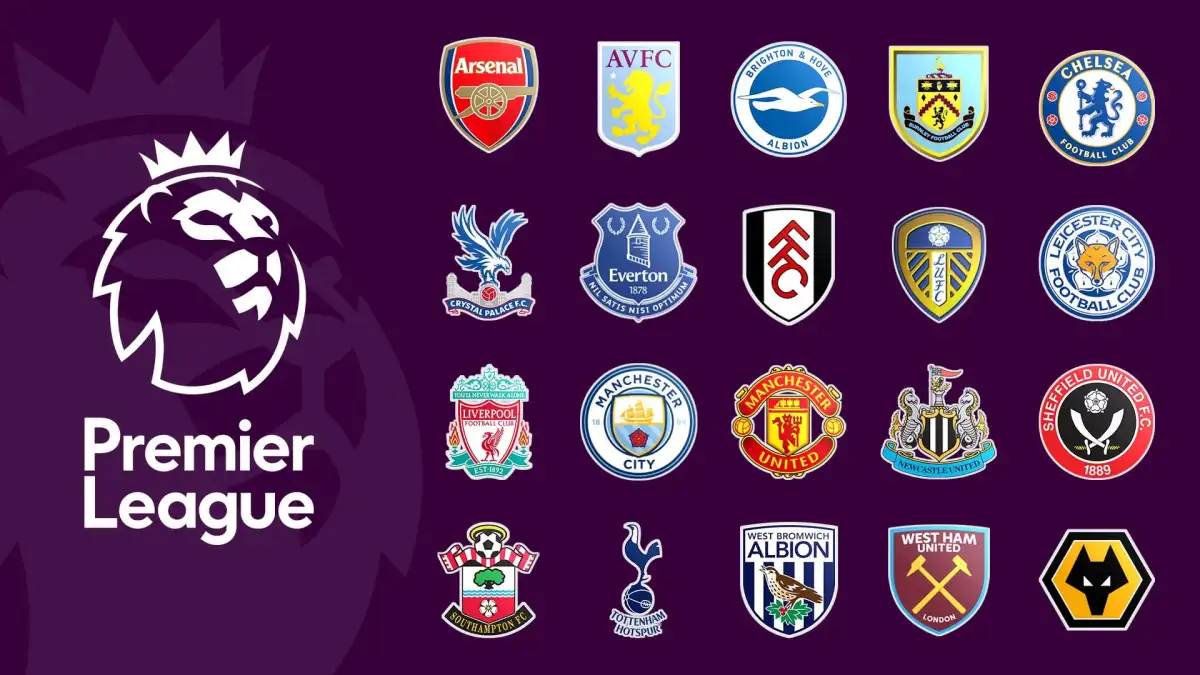
The 2022/23 Premier League season set a record with 1,084 goals and 2.85 goals per game, but not all big clubs contributed to high scores in the same way or for the same tactical reasons. Comparing how the main contenders attacked, defended, and controlled risk shows why some fixtures had a high natural chance of going over common goal lines, while others stayed tighter despite strong reputations.
Why “Big Club” Style Matters for Over Bets
Labeling a club as “big” says nothing about its risk profile; what matters for goal counts is how aggressively it pushes numbers forward, how high it defends, and how much chaos it tolerates. In 2022/23, Manchester City, Arsenal, Liverpool, Manchester United, Chelsea, and Tottenham all entered with elite status but produced very different patterns in goals scored and conceded. Those differences created distinct baseline probabilities that their games would clear thresholds such as over 2.5 or over 3.5 goals, regardless of opponents.
When a team’s style consistently generates high shot volume and xG while accepting defensive vulnerability, its matches naturally cluster at the high-scoring end unless finishing variance intervenes. Conversely, a side that controls tempo, limits transition opportunities, and defends deep may still score plenty but suppresses total game chaos, reducing the frequency of very high totals even if the squad is strong. Understanding which big clubs fell into each camp in 2022/23 is what turns general reputation into practical expectations.
Manchester City and Arsenal: Controlled Aggression and Repeated High Totals
Manchester City finished 2022/23 with 94 league goals, averaging 2.47 per match, the highest in the division, while Arsenal followed with 88 goals at roughly 2.31 per game. Both sides used high-possession, positionally structured attacks that pinned opponents back, generating sustained pressure and consistent shot quality rather than chaotic end‑to‑end exchanges. The outcome was a large number of fixtures where one team did most of the scoring, pushing overs through sheer dominance rather than mutual openness.
From a bettor’s perspective, this style meant that the chance of high totals depended less on the opponent’s attacking ambition and more on whether City or Arsenal hit their usual attacking standards. Against weaker sides that accepted long periods without the ball, the probability of 3+ goals rose because the favourite’s sustained xG eventually translated into multiple conversions. Against fellow big clubs comfortable in possession, matches could still produce higher totals, but the route there involved more transition attacks and pressing duels than pure one-way pressure.
Liverpool and Spurs: Transition-Heavy Styles and Volatile Scorelines
Liverpool conceded 47 league goals in 2022/23 while maintaining a strong attacking output, reflecting a season where their press and structure occasionally broke down and left space behind. Their matches often featured long stretches of pressure for and against, increasing the number of dangerous transitions and shots for both teams even when Liverpool were favourites. This dual-edge style created fixtures with a structurally higher chance of both teams scoring and of totals pushing beyond typical lines, especially when opponents were brave enough to counter quickly.
Tottenham, under a defensively oriented framework that struggled at times, combined considerable attacking talent with periods of passive off‑ball play. When out of form, this mix often led to games where Spurs conceded significant xG early and were then forced to open up chasing results, turning initially tight setups into stretched battles with multiple goals. For bettors, this kind of conditional volatility matters: once Spurs or Liverpool went behind, the probability of a high-scoring outcome grew sharply because game state pushed them into even more aggressive patterns.
Conditional Scenario: Game State as a Style Amplifier
Across 2022/23, game state consistently changed how big clubs expressed their underlying styles, and this had a direct impact on total goals. When an aggressive team scored first, it could either continue pressing for a second and third or switch to control mode; when it conceded first, it often increased risk, raising both its own xG and the opponent’s counter-attacking chances. Liverpool and Spurs, in particular, tended to become more open when trailing, turning already proactive tendencies into high‑variance exchanges that inflated the probability of overs from that point onward.
Manchester United and Chelsea: Structural Issues and Suppressed Goal Output
Manchester United and Chelsea, despite their stature, did not match City or Arsenal’s attacking fluency across the full season, and their stylistic issues showed in more moderate scoring patterns. United went through a transitional phase under a new manager, alternating between high pressing and more cautious control, which produced a mix of scorelines instead of a consistently high-goal identity. Chelsea, meanwhile, endured managerial changes and attacking inefficiency, creating many matches where possession did not translate into sustained xG or conversion.
Because these sides often struggled to convert territorial or technical advantages into goals, their fixtures did not automatically infer high probabilities of overs purely from brand name. In practice, the chance of totals clearing higher lines depended heavily on the opponent and on whether specific tactical choices—such as pressing height or personnel changes—unlocked more open patterns. As a result, blindly treating “big club” labels as proxies for high scoring would have overstated overs potential in a significant slice of United and Chelsea games.
Table: Stylised Comparison of Big-Club Styles and High-Score Tendencies
Because numbers and tactics interact, it is useful to combine them in a compact view that emphasises how style characteristics from 2022/23 relate to high‑goal probabilities. The table below captures this for a simplified group of major clubs, focusing on their attacking approach, defensive risk, and the implied tendency for higher totals in typical league fixtures.
| Club (2022/23) | Attacking pattern | Defensive risk profile | Implied tendency toward high totals |
| Manchester City | Structured, high-possession, high shot volume | Generally controlled, few open transitions | High, driven mainly by one-sided dominance |
| Arsenal | Aggressive positional play, wide overloads | Moderate risk from high line | High, especially versus weaker teams |
| Liverpool | Direct pressing, quick vertical transitions | Elevated risk from broken press | Very high, from both teams’ scoring |
| Tottenham | Counter-focused, strong front line | Periodic collapses when under pressure | High once behind, moderate when controlling |
| Man United | Mixed press and possession | Variable compactness, fewer extremes | Medium, opponent- and game-state dependent |
| Chelsea | Possession without consistent penetration | Often structurally sound | Medium to low, absent specific matchups |
This stylised comparison makes clear that “big club” is not a single scoring archetype; dominance, volatility, and inefficiency each shape totals differently. City and Arsenal pushed averages up mainly through repeated multi‑goal wins, Liverpool and Spurs did so through open, transition-heavy games, while United and Chelsea sat closer to league norms despite names and squads. For over/under bettors, this means correctly classifying style type matters more than simply noting the logo on the graphic.
How Pre‑Match Apps Turn These Styles into Practical Edges
Apps and stats sites that aggregate 2022/23 data—goals for/against, xG numbers, and home/away splits—effectively compress these stylistic realities into quantitative form. For City and Arsenal, high goals‑per‑game figures, frequent wins by two or more goals, and elevated xG per match show up clearly, confirming a structural push toward higher totals in many fixtures. For Liverpool and Spurs, you see a different signature: strong attacking metrics paired with higher-than-elite goals conceded, signalling matches where both sides have fuel for goals.
When you use that data to benchmark a specific fixture—asking whether the current opponent is likely to accept or resist open exchanges—you move from a raw “big match, expect goals” intuition to a match-up specific probability view. That pre‑match discipline turns style categories into filters: some fixtures become legitimate high‑line candidates, while others involving the same clubs look more fairly priced or even lean toward unders once styles and opponent tendencies are combined.
Integrating Style Knowledge into UFABET Pre‑Match Decisions
In an applied routine, you still need to turn these style insights into concrete choices on the betting screen. If you have already concluded from 2022/23 data that City’s home games against bottom-half sides carry a structurally high chance of multi‑goal wins, while Liverpool’s fixtures lean more toward both teams scoring with higher volatility, that framework can guide how you read goal lines inside ufabet168 before each round. By arriving at the betting destination with a pre‑formed view of style-driven goal probabilities, you are less likely to be swayed purely by headline odds or promotions and more likely to accept or reject prices based on whether they respect each club’s typical scoring profile.
Where Style-Based Overs Logic Breaks Down
Even in a historic high-scoring season, there are clear failure points if you lean too heavily on style labels. Injuries, rotations around congested schedules, and tactical tweaks against particular opponents can temporarily mute a team’s usual attacking output or force a more conservative plan. For example, a normally aggressive side might adopt a lower block away at a direct rival late in the season, suppressing shot volume and reducing the true probability of clearing a high goal line despite its general profile.
There is also the risk of backward-looking bias: noticing that a run of big‑club games went over in a small sample and then assuming that pattern will persist without re-checking current metrics. In 2022/23, form swings and World Cup-related disruptions meant that early-season and late-season versions of the same team could behave differently in terms of chance creation and defensive stability. If style-based reasoning does not adapt to those shifts, it drifts away from real probabilities and turns into narrative-driven guessing.
Summary
Comparing big Premier League clubs’ playing styles in 2022/23 shows that high-scoring matches arose from distinct mechanisms—one-sided domination for City and Arsenal, transition volatility for Liverpool and Spurs, and more moderate patterns for United and Chelsea. Treating those styles as inputs to pre‑match goal probabilities, and cross-checking them with season-long data on goals and xG, creates a more realistic picture of when over lines are structurally supported and when “big club” reputation alone overstates scoring potential.
Leave a Reply